
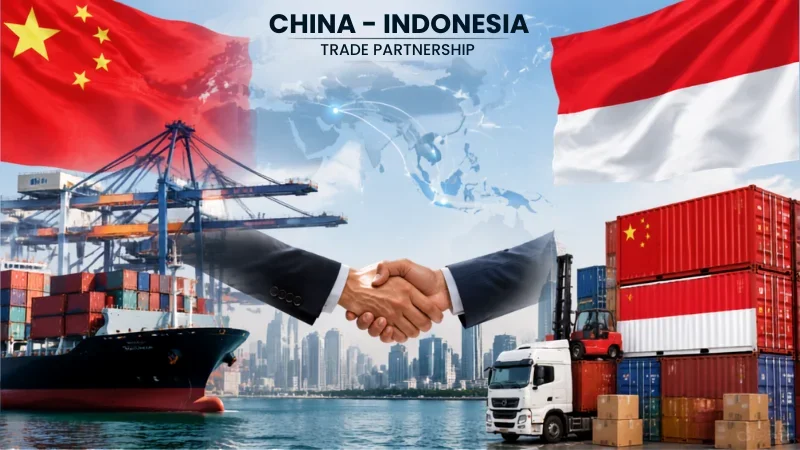
China is Still Indonesia's Main Import Source: Business Opportunities and Trends in Goods Entering the National Market
Trade relations between Indonesia and China continue to play a strategic role in national import activities. Based on data from the Central Statistics Agency (BPS), China is still the country of origin for Indonesia's largest non-oil and gas imports in January 2026 with a value of around US$7.89 billion or covering 43.75 percent of Indonesia's total non-oil and gas imports.
The large value of imports shows that China not only acts as a supplier of consumer goods, but also as an important partner for domestic industrial needs. Products that are often imported from China include mechanical machines and equipment, electrical machines/equipment and their components, as well as various plastic products.
This trend shows changes in Indonesia's import patterns. Import activities are currently increasingly related to production, investment and business development needs. BPS noted that Indonesia's imports of capital goods in January 2026 reached US$4.49 billion and increased 35.23 percent compared to the same period the previous year. These capital goods are generally used to support industrial activities, development and business expansion.
For Indonesian business people, this condition opens up great opportunities to source products from China. These opportunities are not only limited to resellers or retail trade, but also include the manufacturing, construction, technology, spare parts, production machinery and other industrial needs.
However, increasing import activity also requires business actors to better understand the international trade process. Selecting the right supplier, checking product specifications, understanding the HS Code, completeness of documents, and the customs clearance process are important factors so that import activities run smoothly.
Apart from considering competitive prices for products from China, importers also need to pay attention to aspects of Indonesian regulations. Each category of goods may have different provisions regarding licensing, standards and import restrictions. Mistakes in the classification of goods can cause delays in the process of releasing goods and additional costs.
With China's position as Indonesia's largest source of imports, the ability to manage the supply chain is an important advantage for companies and business actors. Importers who have careful planning, from selecting suppliers to sending goods to Indonesia, will have greater opportunities to gain cost efficiencies and maintain smooth business operations.
In the future, Indonesia-China trade relations are expected to remain an important part of national industrial development. For business actors who want to take advantage of import opportunities, understanding regulations and choosing an experienced logistics partner are important steps to ensure the import process runs safely and effectively.
Official Reference Source
- Central Statistics Agency (BPS) - Trade Balance Surplus at the Beginning of 2026, 3 March 2026.
- Central Statistics Agency (BPS) - BPS: Manufacturing Products Support the Continued Growth of Non-Oil and Gas Exports, March 3 2026.
- Central Statistics Agency (BPS) - Monthly Import Foreign Trade Statistics January 2026, released April 2 2026.